

Flexible interval length.
25 is the default. A stepper goes from 25 to 120 minutes in 5-minute steps, with presets at 25, 45, 60 and 90. Shallow Focus starts at 10. Match the interval to the task, not the other way around.
The Pomodoro technique
Pomodoro has lasted since the late 1980s because the rule fits on a sticky note: 25 minutes on, 5 off. Catch the Ghost keeps the block and the break, and puts a chapter from history at the end of every Deep Focus session.
The Pomodoro technique is a time-management method: work for 25 minutes, take a 5-minute break, and after four rounds take a longer break of 15 to 30 minutes. Francesco Cirillo invented it as a student in the late 1980s and named it after his tomato-shaped kitchen timer (pomodoro is Italian for tomato).
It makes starting cheap. Twenty-five minutes is small enough to commit to on a day you don't want to, and long enough to make visible progress before the break. The bell at the end gives you a finish line you can see coming.
The break is not optional. A 5-minute pause between blocks is part of the method. Skip the breaks and you're doing timed work, not Pomodoro.
A fixed 25-minute block assumes the same energy all day. Deep creative work often wants longer once you're in it, and low-energy admin wants shorter. The original rule also treats work that needs all of you the same as work you can do half awake.
If rigid timing is the part that never worked for you, read our guide to Pomodoro for ADHD.
Catch the Ghost keeps the focused block and the finish line, and offers a timed break when each session ends. It changes four things: the length, the mode, the company and the reward.
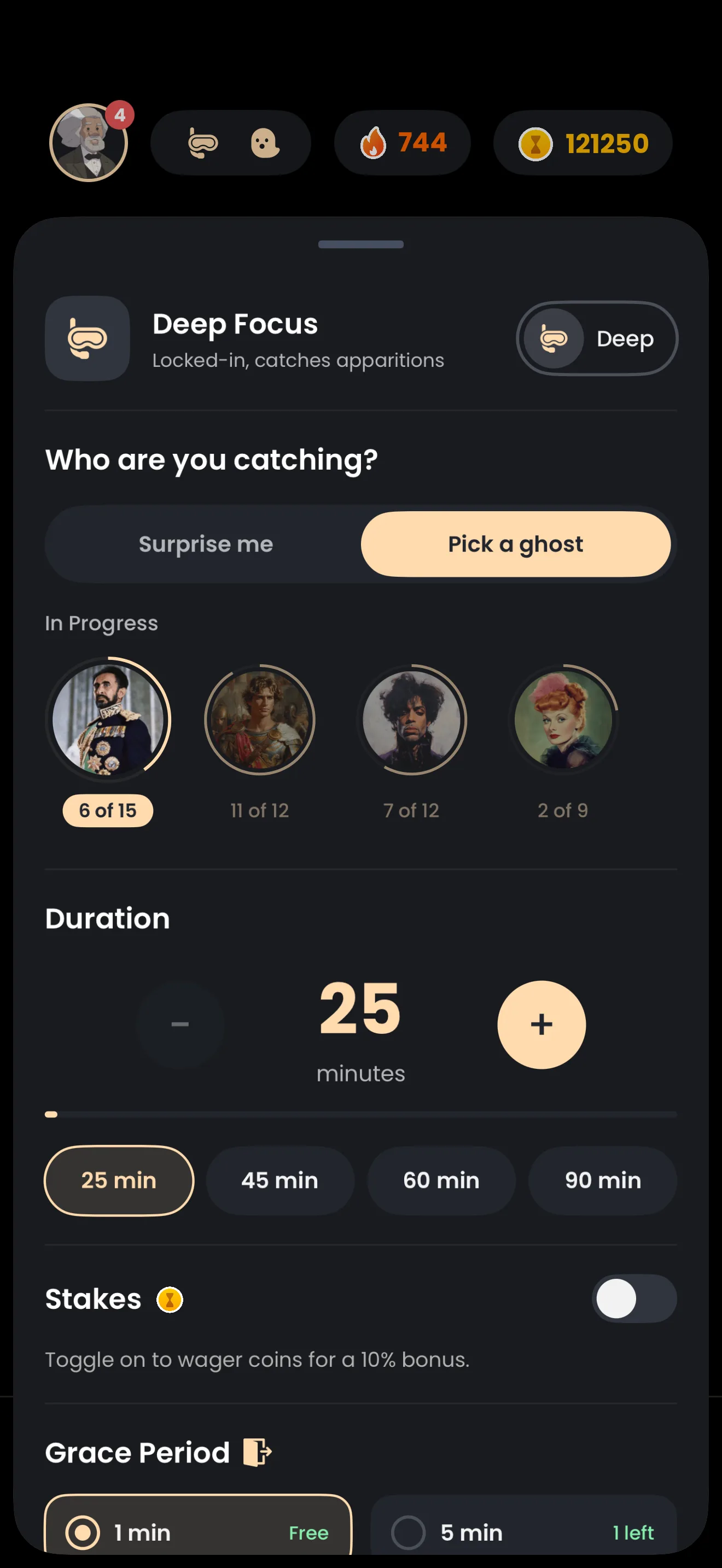
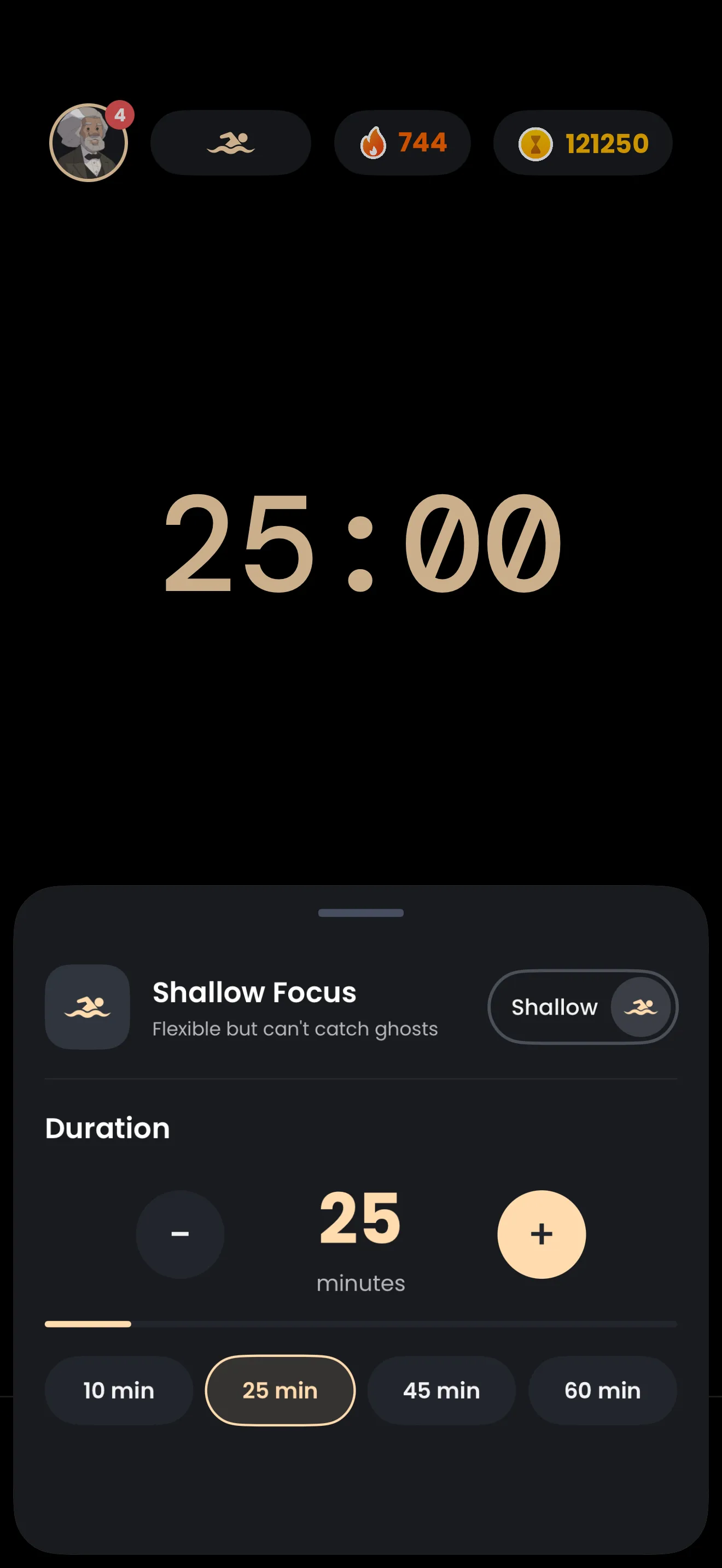
25 is the default. A stepper goes from 25 to 120 minutes in 5-minute steps, with presets at 25, 45, 60 and 90. Shallow Focus starts at 10. Match the interval to the task, not the other way around.
Deep Focus is the dive: 25 to 120 minutes, and every finished session catches a chapter. Shallow Focus is for the inbox and errands: 10 minutes and up, coins and streak, no chapter. Different work, different timer.
Before a Deep Focus session, the app asks who you are catching. Steer toward Philosophy or Science, or leave it on Lucky. Or open a Focus Together room for up to 8 people: timers start on the same second, and when two or more of you finish, everyone who finished earns double. The original version assumes you are always alone with a kitchen timer.
Instead of a bell, a chapter. During Deep Focus a piece of history paints itself in, dot by dot, and it picks up where the last one left off: a quote, a story or an image. Finish and it's yours, with coins and XP on top.
Common questions
The Pomodoro technique is a time-management method invented by Francesco Cirillo in the late 1980s. You work in focused intervals (traditionally 25 minutes), take a short break (5 minutes), and after four intervals take a longer break (15 to 30 minutes). The name comes from the tomato-shaped kitchen timer Cirillo used as a student.
It's short enough to start when you don't feel like it. It's long enough to make visible progress before the break, and the bell gives you a finish line you can see coming. Treat 25 as a starting point: plenty of people work better at 45 or 60, or at 15 on a tired day.
Yes. Timed blocks make a long evening of revision easier to start, and the breaks give you a set point to stand up and reset. Test yourself during the block rather than rereading. To study with friends, open a Focus Together room: when two or more of you finish, everyone who finished earns double coins.
A regular Pomodoro timer rings. Catch the Ghost rewards. Every finished Deep Focus session catches another chapter from history, painted in dot by dot over the length of the session, and pays coins and XP. You also get lengths from 10 to 120 minutes, a category picker to steer who you meet, Focus Together rooms that pay double when two or more finish, and separate Deep Focus and Shallow Focus modes.
Yes. When a session ends, tap Take a Break on the rewards screen, set the minutes (5 by default) and a ring counts down your break. It's free.